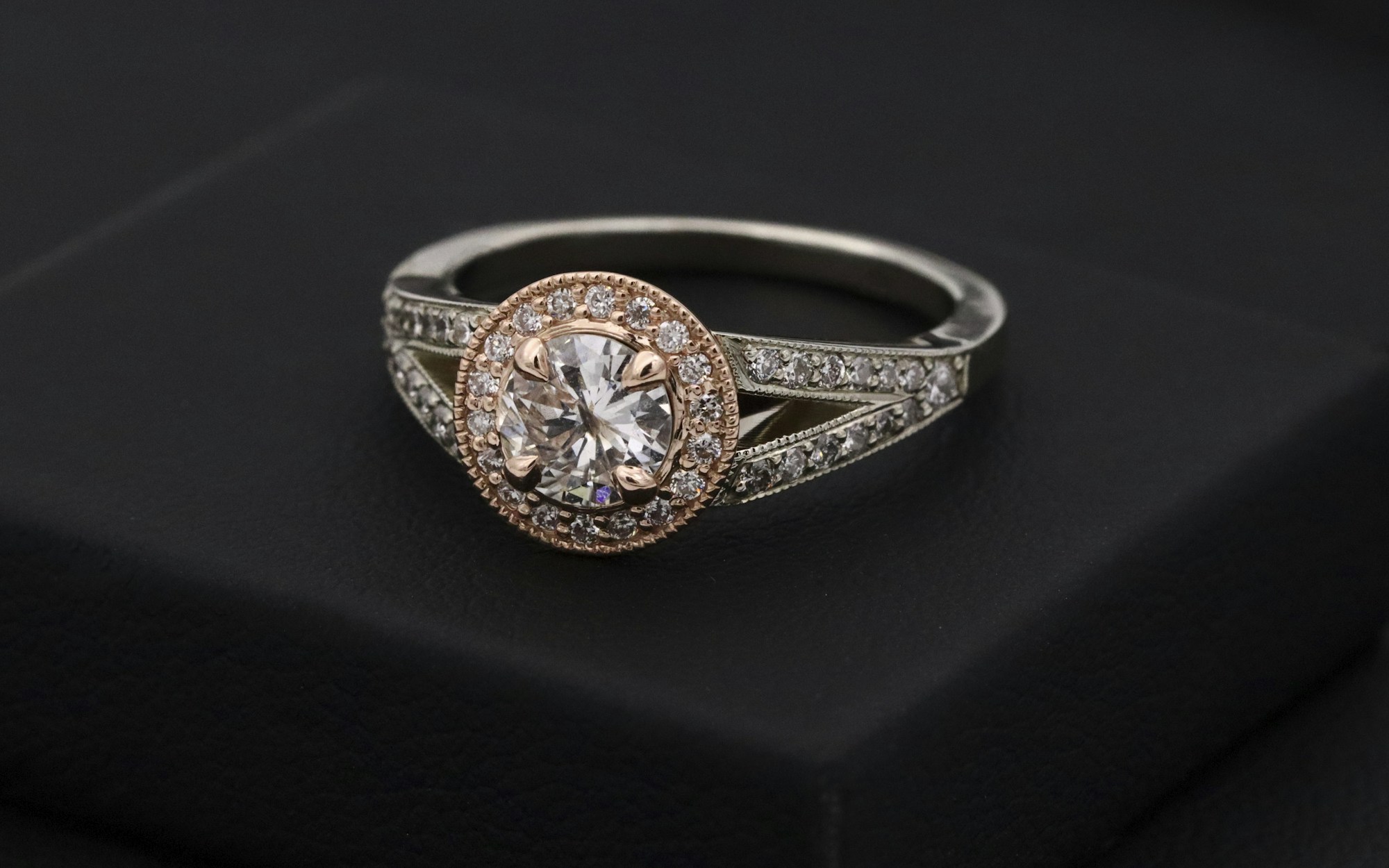
Engagement ring styles decide far more than the look of a ring: they shape how the diamond meets the light, how it wears through ordinary days and how much of the budget goes to the stone rather than the metal around it. The solitaire, the halo, the three-stone and their quieter relatives each answer a different question. Here is how every style works, what the settings cost at the time of writing, and which one suits whom.
Shopping pre-loved? Discover authenticated pre-owned luxury, including pieces from houses such as Rolex, Cartier and Hermès, from What Goes Around Comes Around at Amazon Luxury Stores, a resale boutique that backs its pieces with its own authenticity guarantee. (Affiliate link: as an Amazon Associate we earn from qualifying purchases.)
At a glance
- Most chosen style: the solitaire, picked by 38% of couples in The Knot’s 2026 Real Weddings Study.
- Average spend: about $4,600 on an engagement ring in 2025, with an average center stone of 1.9 carats, according to The Knot.
- Setting prices: from about $1,000 for a simple gold solitaire setting, before the center stone, at the time of writing.
- Most protective: the bezel, which wraps the stone in a rim of metal.
- Most presence for the budget: the halo, which frames the center stone with smaller diamonds.
- Most symbolic: the three-stone, often said to represent past, present and future.

What are the main engagement ring styles?
The Gemological Institute of America draws a useful line between a ring’s setting, meaning the way a stone is held, and its setting style, meaning the overall arrangement of stones. Prong, bezel, channel and tension are settings. Solitaire, halo, three-stone, pavé, cathedral, cluster and toi et moi are styles. Most rings combine the two: a solitaire is usually held in prongs, a halo is often finished with a pavé band, and a three-stone can be set in prongs or bezels.
Both choices matter. The style decides the silhouette and how much of the budget goes into accent diamonds; the setting decides how secure the center stone is, how much light reaches it and how easily the ring can later be resized.
Solitaire: why is it still the most popular style?
One stone, a band, and nothing in the way. In The Knot’s 2026 Real Weddings Study, which surveyed more than 10,000 couples married in 2025, 38% chose a solitaire, as reported by Rapaport. Blue Nile’s own sales figures point the same way, with solitaires at 26% of its engagement rings, ahead of pavé at 18%, side-stone designs at 13% and halos at 8%.
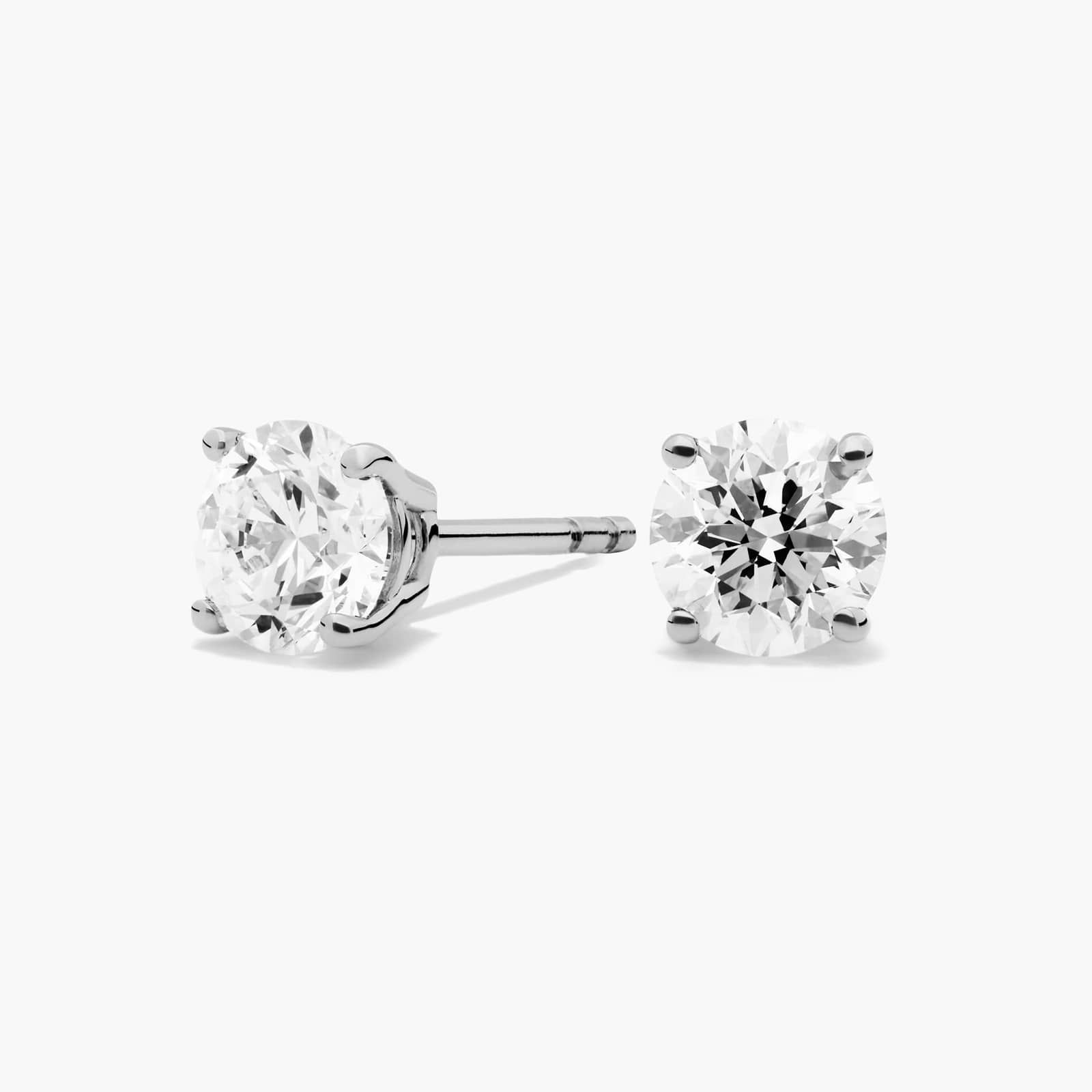
The appeal is practical as well as aesthetic. Prongs lift the diamond above the band so light enters from every side, and Jewelers Mutual notes that simple prong designs are among the most affordable settings, which leaves more of the budget for the stone. The trade-off is height: a raised stone is more exposed to knocks, and Jewelers Mutual suggests a lower setting for anyone who works with their hands.
At the time of writing, Blue Nile lists its Petite Solitaire setting in 14k yellow gold at $1,000 and its Classic Four Prong Solitaire in platinum at $1,180, both before the center diamond. At the other end of the scale, the six-prong Tiffany Setting has been listed from about $1,540 in 18k gold with a small diamond.
Halo and hidden halo: what do they add?
A halo surrounds the center stone with a ring of smaller diamonds, which GIA notes can make the center look larger. Jewelers Mutual describes it as a way to create a “big look” for less, with one caveat: more accent stones generally mean a higher setting price. Brilliant Earth’s Cambria Halo, for example, carries about 0.20 carats of accent diamonds and is listed at $1,490 for the setting in 14k white gold at the time of writing.
The hidden halo is the quieter variation: the small diamonds sit beneath the center stone and show mainly in profile, a detail for the wearer more than the room. In The Knot’s 2025 study, as cited by VRAI, hidden halos appeared on 18% of engagement rings, ahead of classic halos. Blue Nile’s Petite Hidden Halo Solitaire setting is listed at $1,255 in 14k yellow gold.
In our view, a halo is worth having checked by a jeweler once or twice a year, as any ring with many small stones benefits from a look at the prongs.
Three-stone: what does it symbolize and what does it cost?
A larger center stone flanked by two side stones, the three-stone is often said to represent a couple’s past, present and future, as both GIA and Jewelers Mutual note. Side stones can be rounds, pears, baguettes or trapezoids, and they lengthen the ring’s presence across the finger.
Because the side stones are diamonds too, this style usually costs more than a solitaire before the center stone is even chosen. As one example, Blue Nile lists a channel-set three-stone setting in platinum, with about 0.75 carats of side diamonds based on a 1-carat center, at $4,490 at the time of writing.
Pavé, bezel, cathedral and the other styles worth knowing
- Pavé: many small diamonds set closely along the band, for sparkle all the way around. Blue Nile lists its Riviera Pavé setting (1/6 carat total weight) at $1,500 in 14k white gold and its French Pavé (1/4 carat) at $2,150 in platinum.
- Bezel: a metal rim around the stone. Jewelers Mutual calls it the style that offers the most security and protection; GIA notes it lets in somewhat less light.
- Cathedral: two metal arches rise from the band to hold the center stone, adding height and architecture, though the raised profile is more exposed.
- Channel: stones set in a row between two metal walls. It is smooth and less likely to catch on clothing, but GIA notes it can make resizing difficult.
- Cluster: small diamonds grouped to read as one larger stone, usually at a lower price than a single diamond of the same size.
- Toi et moi: two stones side by side, French for “you and me.”
- Tension: the stone appears to float, held by pressure from the ends of the band. GIA cautions that resizing can be very difficult.
| Style | Best for | Example setting price |
|---|---|---|
| Solitaire | Putting the budget into the stone | about $1,000 to $1,180 (Blue Nile) |
| Hidden halo | A private detail in profile | about $1,255 (Blue Nile, 14k gold) |
| Halo | Maximum presence for the carat | about $1,490 (Brilliant Earth, 14k white gold) |
| Pavé band | All-over sparkle | about $1,500 to $2,150 (Blue Nile) |
| Three-stone | Symbolism and a longer silhouette | about $4,490 (Blue Nile, platinum, channel-set) |
| Bezel | Active hands and everyday wear | varies by maker |
How do you choose the right engagement ring style?
Start with the life the ring will lead. Hands that are busy every day suit a bezel or a lower-set solitaire; a ring worn by someone at a desk can carry a taller cathedral or a halo with ease. Then think about the budget split. The Knot puts the average 2025 engagement ring at about $4,600, and our engagement ring budget guide shows how quickly accent diamonds and metal add up.
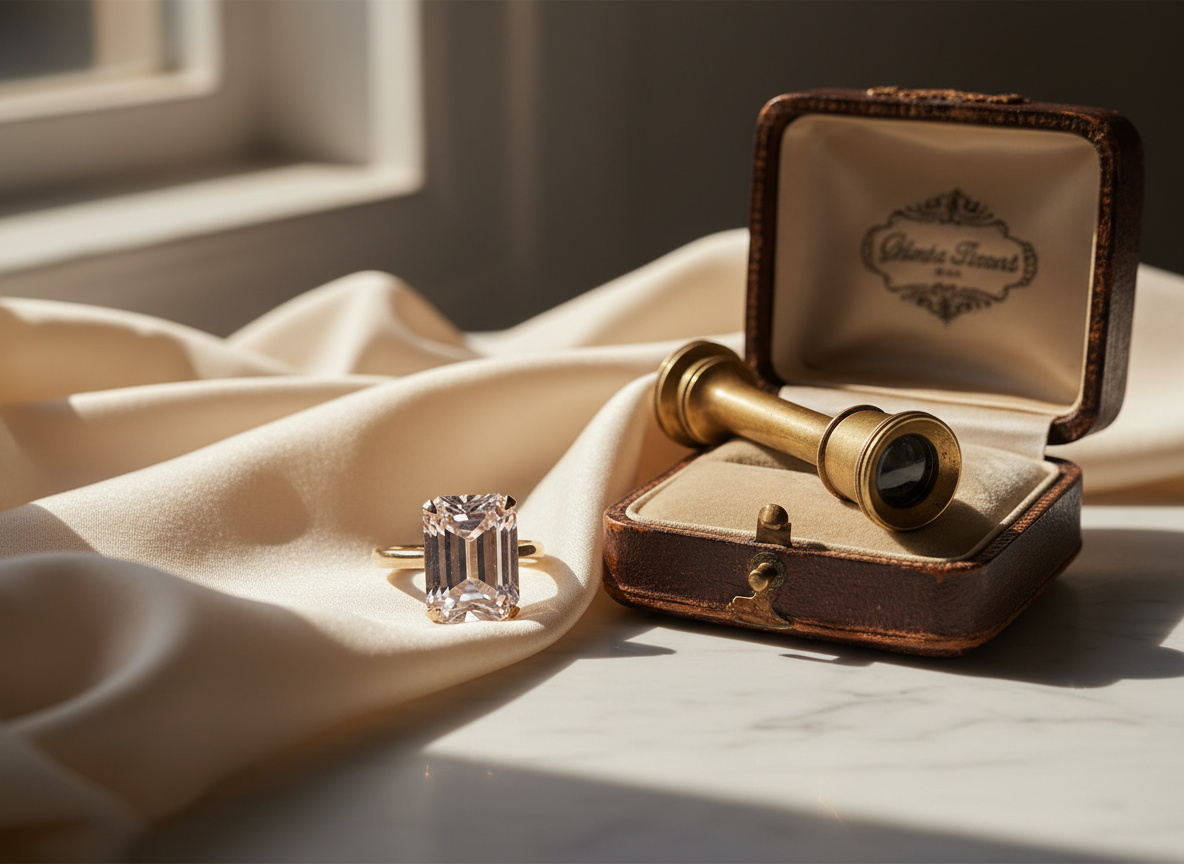
The stone shape matters too. In The Knot’s 2026 study, round (26%) and oval (25%) were the leading shapes, yellow gold was chosen by 39% of couples, and 61% chose a lab-grown center stone. An oval reads beautifully in a hidden halo or a slim solitaire; an emerald cut is classic with tapered baguettes in a three-stone. Our diamond shapes guide sets out how each cut wears.
In our view, the solitaire remains the surest choice for a first serious ring: it puts the money into the diamond and never dates. Choose a halo when presence matters more than carat weight, a three-stone when the ring should carry a story, and a bezel when it will live a full, active life.
Ready to compare? Blue Nile’s engagement ring settings let you see solitaire, hidden halo and pavé designs side by side before choosing a stone. The Carat Post is a Blue Nile affiliate partner and may earn a commission, at no extra cost to you.
A short history of engagement ring styles
The modern solitaire has a birthday. In 1886, Tiffany & Co. introduced a six-prong setting that lifted the diamond above the band, at a time when stones were often set low in metal. Claw prongs themselves, GIA notes, draw on Georgian and Victorian jewelry.
The two-stone ring is older still in spirit. GIA recounts that in the early 19th century Napoleon Bonaparte gave Joséphine a toi et moi ring with a pear-shaped diamond and a pear-shaped sapphire. Cluster designs, Jewelers Mutual observes, often borrow from vintage styles, and today’s hidden halo is the latest chapter: a frame of diamonds tucked out of sight, seen only when the hand turns.
A setting is a frame. Choose it for the life the ring will live, not only the light it will catch.
Frequently asked questions
What is the most popular engagement ring style?
The solitaire. In The Knot’s 2026 Real Weddings Study, 38% of couples chose one, and it also leads Blue Nile’s own sales at 26%.
Does a halo make a diamond look bigger?
A halo frames the center stone with smaller diamonds, which GIA notes can make it look larger. The accent stones add to the setting price.
Which engagement ring style is the most durable?
The bezel, which surrounds the stone with metal, offers the most protection according to Jewelers Mutual. Tall prong and cathedral settings are more exposed to knocks.
How much does an engagement ring setting cost?
At the time of writing, simple gold solitaire settings start at about $1,000 at Blue Nile, halo settings run about $1,250 to $1,500, and three-stone settings with side diamonds can reach several thousand dollars, all before the center stone.
Sources: GIA, Ring Settings and Setting Styles · Jewelers Mutual, Types of Engagement Ring Settings · Rapaport, on The Knot 2026 Real Weddings Study · Stacker and VRAI, 2025 Engagement Ring Trends · Blue Nile, Engagement Ring Statistics · Blue Nile, Settings · Blue Nile, Channel-Set Three-Stone Setting · Brilliant Earth, Cambria Halo
Shop the story
- A reusable ring sizer, to confirm the size before ordering a setting.
- A velvet ring box, for the moment itself.
- A soft jewelry brush, to keep pavé and halo diamonds bright.
- A 10x jeweler’s loupe, for checking prongs and small stones up close.
As an Amazon Associate, The Carat Post earns from qualifying purchases. Links are search results, not endorsements of a specific seller; check each listing’s details before buying.