The Carat Post independently selects every recommendation. If you purchase through certain links, we may earn a commission at no additional cost to you. Affiliate relationships do not determine our editorial conclusions.
Why trust this recommendation?
Every piece here is chosen by Karina, who has spent 11 years in fine watches and is studying gemology with GIA. Picks are judged from the retailer’s published specifications: stone, grading, setting, metal and price.
Prices were checked on the date shown in the article and can change. Specifications come from the retailer’s listing; nothing is estimated.
Read our editorial standards.

Every diamond has a passport. It is written in four words, each beginning with C, and once you can read it you will never shop for a stone the same way again.
Ring prices shown are for the setting; the center diamond is sold separately.
Shop the story at Blue Nile
- Diamond search: filter cut, color, clarity and carat at once.
- Blue Nile’s diamond guide to every grade.
- Classic Four Prong Solitaire in 14k rose gold, $870 setting.
The Carat Post may earn a commission.
At a glance
- Cut: how well the stone returns light. The most important C for sparkle.
- Color: graded D (colorless) to Z (light yellow or brown).
- Clarity: graded Flawless down to I3, based on inclusions and blemishes.
- Carat: weight, not size. One carat equals exactly 0.2 grams.
- Who invented it: the Gemological Institute of America (GIA), in the mid-twentieth century.
What are the 4Cs of diamonds?
The 4Cs are the universal standard for describing diamond quality: cut, color, clarity and carat weight. Together they determine most of a stone’s price, and they appear on every grading report from GIA and other major labs. Lab-grown and natural diamonds are graded on exactly the same scale.

Cut: why it matters most
Cut is not the shape. It is the quality of the proportions, symmetry and polish, and it decides how brilliantly the diamond plays with light. A well-cut stone can look larger and whiter than a poorly cut one of higher grades. If you only stretch your budget on one C, make it this one: aim for Excellent or Ideal on a round.

Color: from D to Z
The scale begins at D, completely colorless, and runs to Z, where a warm tint is obvious. Most buyers find G and H near-colorless to the eye, especially in a yellow or rose gold setting, and far better value than D through F.

Clarity: from Flawless to I3
Clarity measures tiny internal features and surface marks. The grades run Flawless, Internally Flawless, VVS1 and VVS2, VS1 and VS2, SI1 and SI2, then I1 to I3. The goal for most people is “eye-clean”: no inclusions visible without magnification. That is often achievable at VS2 or even SI1, so check the stone’s photos rather than paying for a grade you cannot see.

Shop the story
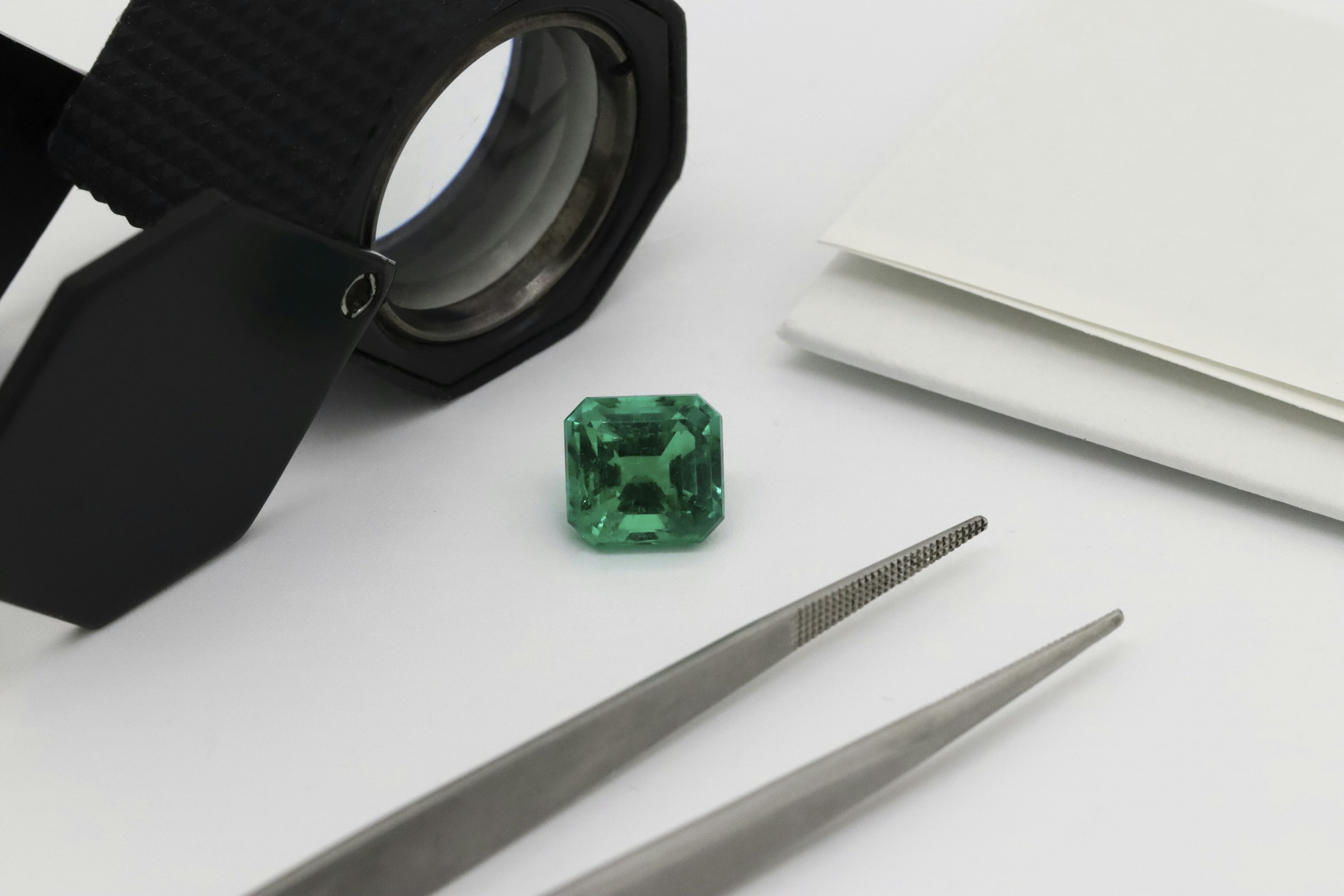
- A 10x jeweler’s loupe: see clarity the way a grader does.
- Books on diamonds and gemology for deeper reading.
- An ultrasonic jewelry cleaner, because a clean stone always grades better to the eye.
As an Amazon Associate, The Carat Post earns from qualifying purchases.
Carat: weight, not size
A carat is 0.2 grams. Price rises steeply with weight because large rough is rarer, so a 2-carat stone costs well over twice a 1-carat one. A clever trick: stones just under a round number, such as 0.9 or 1.9 carats, look almost identical but can cost noticeably less.

A short history of the 4Cs
Before the mid-twentieth century, jewelers described diamonds with a patchwork of terms that varied from shop to shop. The Gemological Institute of America, founded in 1931 by Robert M. Shipley, set out to change that. In the early 1950s its researchers, led by Richard T. Liddicoat, built the D-to-Z color scale and the clarity system still in use today, and the 4Cs became the common language of the trade worldwide.
Buy the sparkle, not the certificate.

How to use the 4Cs when you shop
Set the cut first, then choose the carat you want, then lower color and clarity until the price fits, stopping at eye-clean and near-colorless. Online inventories make this easy: Blue Nile’s diamond search lets you filter all four Cs at once, and its diamond guide explains each grade in more depth.
Once you have set your priorities, our selection of the best fine jewelry from $5,000–$10,000 shows how these trade-offs play out in finished pieces, and The Carat Post’s fine jewelry buying guides go further on shapes, settings and grading reports.

How to care for your diamond jewelry
Diamonds are hard, but they attract skin oil and lotion, so a ring worn every day dulls quickly. Once a week, soak it in warm water with a drop of mild dish soap, brush gently behind the stone with a soft jewelry brush, rinse and dry with a jewelry polishing cloth. An ultrasonic jewelry cleaner is safe for most solid diamond and gold pieces, but skip it for emeralds, opals, pearls and any piece with a loose stone.
Store each piece on its own in a lined jewelry box so diamonds don’t scratch softer metals, keep a travel jewelry case for trips, and leave a ring dish by the sink so rings come off for dishes, the gym, gardening and bleach. Have a jeweler check the prongs once a year. If you buy from Blue Nile, its lifetime warranty covers manufacturing defects for the life of the piece.
Frequently asked questions
Which of the 4Cs is most important?
Cut, because it has the biggest effect on how much a diamond sparkles.
What is a good color and clarity for an engagement ring?
In our view, G to H color and VS2 to SI1 clarity, provided the stone is eye-clean, give the best balance of beauty and value.
How much does one carat weigh?
Exactly 0.2 grams.
Considering a piece in this price range? Send Karina the link and your priorities for an independent second look.
Ask KarinaSources: GIA 4Cs · Washington Diamond · The Diamond Price · Blue Nile Diamond Guide

Why trust The Carat Post
We research every story from published sources and list them at the end so you can check our facts. The Carat Post is a Blue Nile affiliate partner and an Amazon Associate, so we may earn a commission when you buy through our links, at no extra cost to you. Sponsored stories are always clearly labeled, and brands do not review our editorial stories before they run. Prices were checked when this story was last updated and can change.
Shop the story
- A 10x jeweler’s loupe: see clarity the way a grader does.
- Books on diamonds and gemology for deeper reading.
- An ultrasonic jewelry cleaner, because a clean stone always grades better to the eye.
As an Amazon Associate, The Carat Post earns from qualifying purchases.