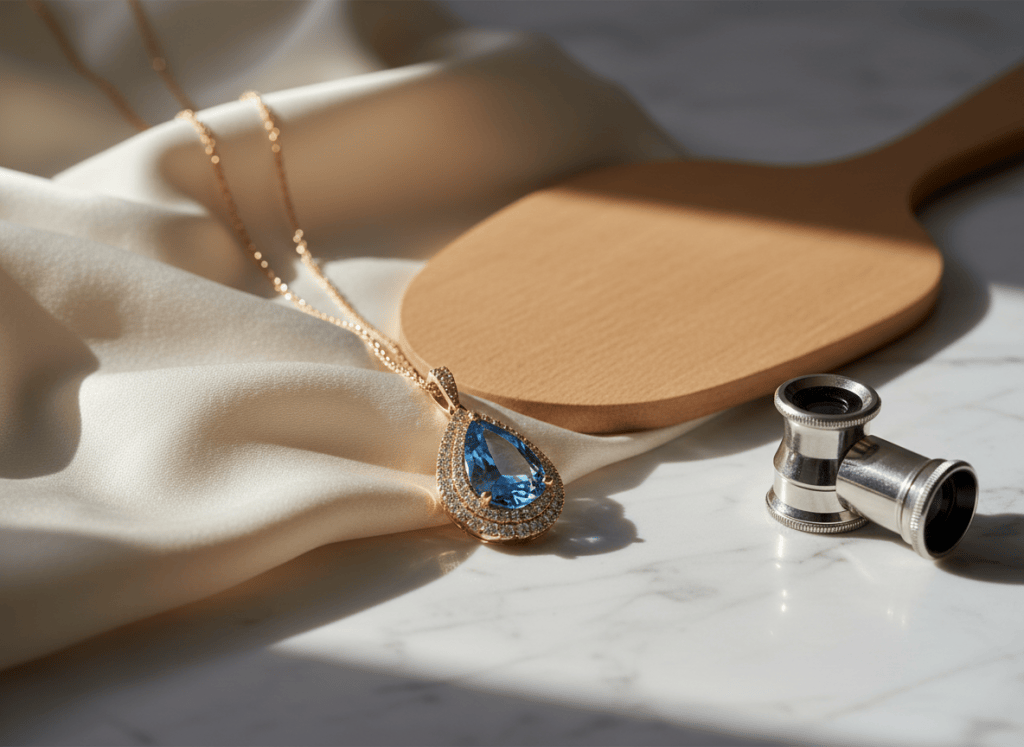
A sapphire from the island once called Ceylon has quietly outshone a room full of diamonds. At Sotheby’s Fine Jewelry sale in Hong Kong, which closed on September 23, a 44.90-carat pear-shaped Ceylon sapphire pendant sold for more than twice its high estimate and led a sale of more than 290 lots that totalled about $7.5 million.
At a glance
- The sale: Sotheby’s Fine Jewelry, Hong Kong, online from September 9 to 23, 2026.
- Total: HK$58.8 million, about $7.5 million, as reported by Rapaport.
- Top lot: a 44.90-carat pear-shaped Ceylon sapphire framed by about 17 carats of diamonds, sold for HK$1.8 million (about $228,500).
- Against estimate: more than double its high estimate of HK$700,000.
- Also in the top five: pink diamond earrings, an unmounted 5.13-carat diamond, a Graff diamond necklace and an 11.08-carat diamond pendant.
What sold at Sotheby’s Hong Kong Fine Jewelry sale?
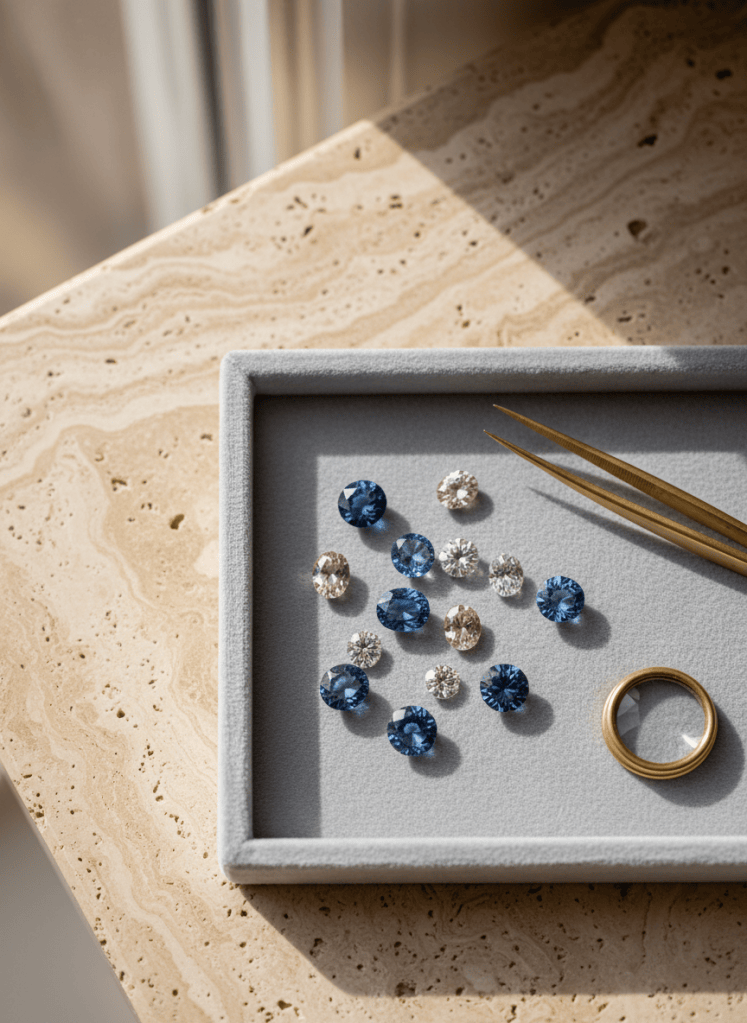
The online sale offered 294 lots, from signed pieces by Graff, Hermès, Bulgari, Cartier and Van Cleef & Arpels to jadeite and coloured gemstones including aquamarine, ruby, spinel and garnet. It brought HK$58.8 million, or about $7.5 million, Rapaport reported on September 24. Sotheby’s states that its published results include buyer’s premium.
According to Rapaport, the five leading lots were:
- Ceylon sapphire and diamond pendant: a 44.90-carat pear-shaped sapphire with about 17 carats of brilliant-cut diamonds, HK$1.8 million (about $228,500), against a high estimate of HK$700,000.
- Pink diamond earrings: a 2.08-carat light pink and a 2.21-carat very light pink diamond, VVS1, HK$1.2 million (about $155,000), offered without reserve against an estimate of HK$1–2 million.
- Unmounted diamond: a 5.13-carat brilliant, F colour, VVS2, HK$960,000 (about $122,400), just above its HK$650,000–950,000 estimate.
- Graff diamond necklace: about 27.60 carats of pear-shaped and brilliant-cut diamonds, HK$832,000 (about $106,100), against HK$550,000–800,000.
- Diamond pendant necklace: an 11.08-carat brilliant of W-X colour, VVS2, HK$832,000 (about $106,100), against HK$280,000–450,000.
Why did the Ceylon sapphire outperform?
In our view, size is the first answer. Sapphires above five carats are uncommon, and a stone of almost 45 carats described as Ceylon in origin is a rare sight in a mid-season online sale. A pear shape of that scale also wears naturally as a pendant, which widens the pool of bidders beyond pure gem collectors.
The second is the estimate itself: a conservative estimate on a large coloured stone tends to invite competition, and online sales, open for two weeks to bidders worldwide, give that competition time to build. Rapaport did not report whether the sapphire had been heated, and that detail matters greatly: unheated sapphires are a small fraction of the market and typically command a significant premium, as Sotheby’s own guide to Ceylon sapphires notes. Buyers should always read the laboratory report on treatment before bidding.
The diamond results tell a parallel story. The 11.08-carat pendant, graded W-X and therefore visibly tinted, sold for close to twice its high estimate, suggesting that bidders were drawn to generous size at a lower price per carat. The colourless 5.13-carat F diamond, by contrast, landed just above its range.
A short history of the Ceylon sapphire
Sri Lanka’s gem gravels have been worked for millennia. Sotheby’s notes that Ceylon sapphires were traded internationally as early as the second century AD, and that the region around Ratnapura, whose name means “City of Gems”, has yielded sapphires for around 3,000 years. Travellers from Marco Polo onward wrote of the island’s treasures.
Ceylon sapphires are prized for a bright, luminous blue, often lighter and livelier than the deep velvety tones associated with Kashmir or the inky blues of some other sources. The most famous of them is the 12-carat oval Ceylon sapphire in the engagement ring chosen by Lady Diana Spencer in 1981, now worn by Catherine, Princess of Wales. That ring did more than any auction to make the blue sapphire a modern classic.
In a sale full of diamonds, the highest price went to a blue stone from an island that has been sending sapphires to the world for two thousand years.
What does this sale say about the jewelry market?
This was a fine jewelry sale rather than a marquee evening auction, which makes it a useful reading of everyday collector demand. The pattern it shows, strong prices for exceptional coloured stones and for large diamonds offered at approachable estimates, echoes the broader shift we have followed this season, from De Beers’ reset of its diamond prices to the headline stones heading to Christie’s in Geneva this November. For another rare stone on the autumn calendar, see our report on the 8.03-carat blue diamond at Elmwood’s.
For the Collector
- Check the report: origin (Sri Lanka, Kashmir, Burma) and treatment (heated or unheated) are the two lines that most affect a sapphire’s price. Look for reports from recognised laboratories such as GIA, SSEF or Gübelin.
- Read estimates as a starting point: in this sale several top lots sold well above their ranges, so budget beyond the high estimate for exceptional pieces.
- Add the fees: Sotheby’s published results include buyer’s premium, but estimates do not; factor in premium, taxes and shipping when comparing prices.
- Where to look next: Sotheby’s lists its upcoming jewelry sales on its jewelry department page; this Hong Kong catalogue also included unheated Sri Lankan and Kashmir sapphires in smaller sizes.
- On value: coloured stones can perform strongly at auction, but results vary by quality and market conditions, and past prices do not predict future value.
Frequently asked questions
How much did the Ceylon sapphire sell for at Sotheby’s Hong Kong?
The 44.90-carat pear-shaped Ceylon sapphire pendant sold for HK$1.8 million, about $228,500, more than double its high estimate of HK$700,000.
How much did Sotheby’s Hong Kong Fine Jewelry sale make?
The September 2026 online sale totalled HK$58.8 million, or about $7.5 million, according to Rapaport.
What is a Ceylon sapphire?
A Ceylon sapphire is a sapphire mined in Sri Lanka, formerly Ceylon. The origin is prized for bright, luminous blues and has been traded for around two thousand years.
Are unheated sapphires worth more?
Generally yes: unheated sapphires are much rarer than heated ones and usually command a significant premium, all else being equal.
Sources: Rapaport · Sotheby’s, Fine Jewelry, Hong Kong · Sotheby’s, Ceylon Sapphires guide