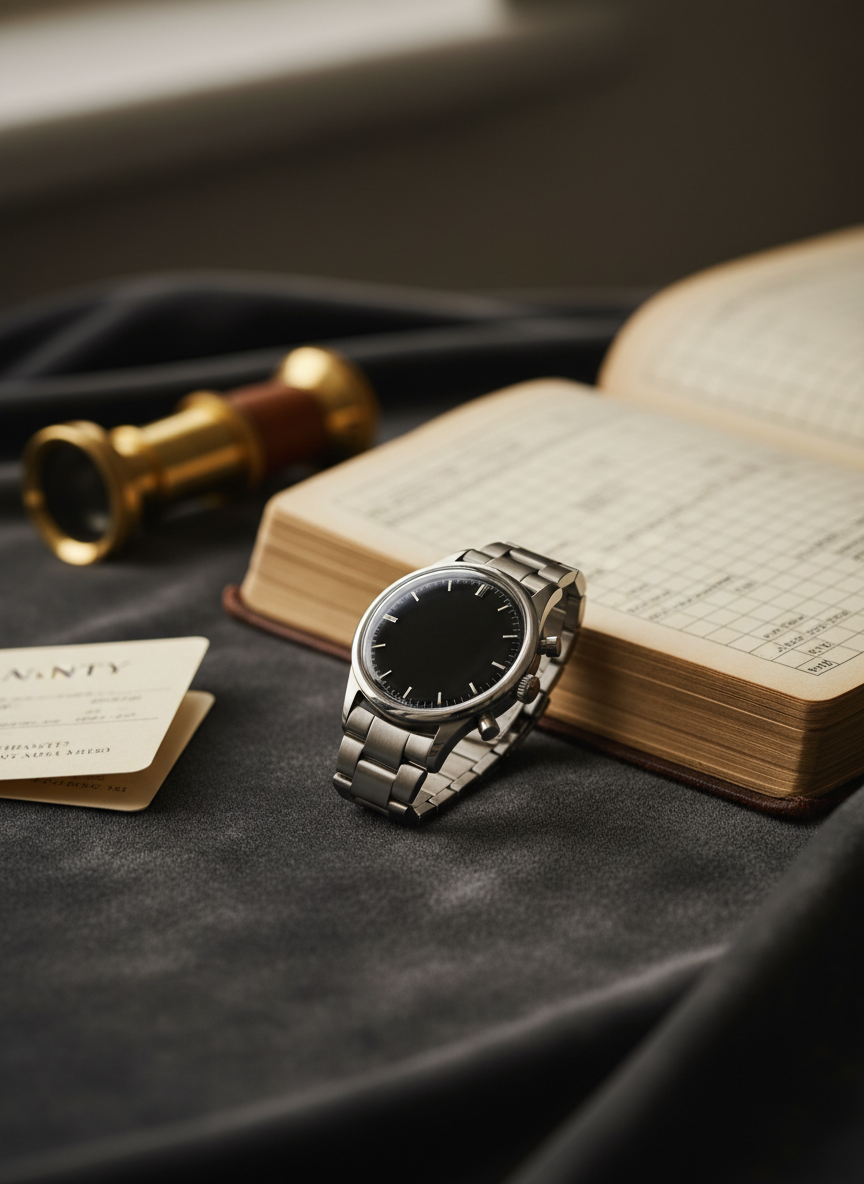
Some watches simply keep time; this one keeps time in conversation with itself. Armin Strom has introduced a new version of its Mirrored Force Resonance Zeitgeist 1665, reference ST26-ZG.90, in which two independent balance wheels settle into a shared rhythm above a movement now finished in a warm 3N yellow gold tone. It is limited to 25 pieces and priced at CHF 82,000, according to the details published by the brand and reported by Monochrome Watches on October 19.
Shopping pre-loved? Discover authenticated pre-owned luxury, including pieces from houses such as Rolex, Cartier and Hermès, from What Goes Around Comes Around at Amazon Luxury Stores, a resale boutique that backs its pieces with its own authenticity guarantee. (Affiliate link: as an Amazon Associate we earn from qualifying purchases.)
At a glance
- Watch: Armin Strom Mirrored Force Resonance Zeitgeist 1665 3N, ref. ST26-ZG.90.
- Price: CHF 82,000 at the time of writing; confirm local pricing with the brand.
- Edition: 25 pieces worldwide.
- Case: Stainless steel, 43mm by 11.55mm, 49.6mm lug to lug, 30m water resistance.
- Movement: Manufacture calibre ARF21-ZG, 3.5Hz, 80-hour power reserve, resonance clutch and flyback twin seconds.
- What is new: 3N yellow-gold-toned mainplate and bridges with a black polished lacquer chapter ring.

What is the Armin Strom Zeitgeist 1665 3N?
It is the second generation of the Mirrored Force Resonance, the watch with which Armin Strom brought the old idea of resonance to the wrist. Two complete regulating systems, each with its own balance wheel, are linked by a patented resonance clutch spring so that they beat in step. The dial reads hours and off-centred minutes, with twin seconds displays sitting above each balance, and a pusher at 10 o’clock works as a flyback, returning both seconds hands to zero at once.
The calibre ARF21-ZG measures 37.2mm across and 6.7mm high, with 39 jewels, 260 components and two barrels for 80 hours of power reserve, running at 3.5Hz (25,200 vibrations per hour). On this edition the mainplate and bridges take a matt 3N yellow gold tone, with hand-bevelled polished edges and black-polished screws. The left side of the mainplate is skeletonised to show the resonance mechanism at work. According to Monochrome Watches, each piece is assembled twice, “once to make it work, and once to make sure it works exactly as it should.”
Over the movement sits a black chapter ring in what the house calls vernis laqué poli, a polished lacquer, while the heat-blued steel hands are finished by hand. The steel case measures 43mm by 11.55mm, with polished flat surfaces, vertically brushed flanks, sapphire crystals front and back and a dark grey Alcantara strap with grey stitching.
How is the 3N edition different from the first Zeitgeist 1665?
The original Zeitgeist 1665 imagined a watch that might have existed in Christiaan Huygens’s day: a lacquered white dial, made in 18k white gold according to Armin Strom’s own product page, over a rose-gold-toned movement meant to recall patinated German silver. The case, calibre, edition size and price are shared with the new model.
What changes is the mood. The 3N tone, a classic pale yellow gold shade used in Swiss movement finishing, gives the architecture a warmer, more traditional glow, and the black polished ring frames it like a picture mount. In our view, the first edition reads as a museum curiosity; the 3N reads as a dress watch with a scientist’s soul.
What is resonance in watchmaking, and where did it begin?
The story starts in 1665, the year in the watch’s name, when the Dutch scientist Christiaan Huygens noticed that two pendulum clocks placed near each other gradually fell into step. Abraham-Louis Breguet and Antide Janvier later built clocks and watches that explored the same effect, and in recent decades independent masters including F.P. Journe, Vianney Halter and Beat Haldimann have returned to it. Journe’s work in particular remains highly sought after at auction, as we saw at Antiquorum’s New York sale this week.
Bringing resonance to a wristwatch is harder than in a clock, because a watch moves constantly with the wearer. Armin Strom’s answer, introduced in 2016 and developed under Claude Greisler, was a thin spring linking the two balances, inspired by the suspension Janvier used in an eighteenth-century resonance clock. The brand states that the solution was certified by CSEM, the Swiss research centre.
A short history of Armin Strom
The name belongs to Armin Strom, a Swiss watchmaker who became known in the later twentieth century for finely skeletonised watches. The modern company, based in Biel, has since built its identity around in-house calibres and open, architectural dials that let the wearer see the mechanism rather than hide it. The Mirrored Force Resonance, now ten years old, is its signature: a complication that few houses attempt and fewer still produce in series.
The Zeitgeist idea, credited to designer Claude Greisler, asks a playful question: what would a portable resonance watch have looked like had it been built with seventeenth-century design codes? The answer is a quiet, almost scholarly dial that lets the movement do the talking.
Two balance wheels, one shared rhythm: a seventeenth-century observation, made wearable in warm gold tones.
For the Collector: price, availability and what to watch
- Price: CHF 82,000 at the time of writing, as listed by Watchonista and Monochrome. US pricing is handled through the brand’s sales team, so confirm with Armin Strom or an authorised retailer before planning a purchase.
- Availability: 25 pieces worldwide, sold through Armin Strom and its retailers. The earlier Zeitgeist 1665 (ref. ST25-RF.ZG) was still shown as in stock on the brand’s official page at the time of writing, so buyers can compare the two tones.
- What drives value: a small edition, a patented resonance clutch, an in-house calibre and hand-finished details such as bevelled bridges and blued hands. Past prices do not predict future value, and resale for independent watches can vary widely.
- How it wears: at 43mm wide and 49.6mm lug to lug it is a substantial watch, so try it on if you can. With 30m water resistance and an Alcantara strap, treat it as a dress piece rather than a swimming companion.
- Compare: if technical independents are your field, see our notes on the Ressence Type 10 DN and the Urwerk UR-300 Time Quantum, two other standout releases this month.
Frequently asked questions
How much does the Armin Strom Zeitgeist 1665 3N cost?
The published price is CHF 82,000 at the time of writing. Local prices can differ, so confirm with Armin Strom or an authorised retailer.
How many Zeitgeist 1665 3N watches will be made?
The edition is limited to 25 pieces worldwide.
What does resonance mean in a watch?
Resonance is when two separate oscillators, here two balance wheels, fall into step with each other. Armin Strom links its two balances with a patented resonance clutch spring.
How is it different from the first Zeitgeist 1665?
The new 3N edition has a yellow-gold-toned movement and a black polished chapter ring. The first version paired a white lacquered dial with a rose-gold-toned movement.
Sources: Monochrome Watches · Watchonista · Armin Strom