The Carat Post independently selects every recommendation. If you purchase through certain links, we may earn a commission at no additional cost to you. Affiliate relationships do not determine our editorial conclusions.
Why trust this recommendation?
Every piece here is chosen by Karina, who has spent 11 years in fine watches and is studying gemology with GIA. Picks are judged from the retailer’s published specifications: stone, grading, setting, metal and price.
Prices were checked on the date shown in the article and can change. Specifications come from the retailer’s listing; nothing is estimated.
The Carat Post is independent and is not affiliated with GIA, Blue Nile or any jewelry house. Read our editorial standards.
The right setting is the one your hands can live with. If you work with your hands, garden, lift or train, choose a bezel or flush setting: the metal covers the diamond’s edge and nothing stands proud to catch. If your days are gentler and you want maximum light, a six-prong solitaire is, in our view, the best balance of sparkle and security. Halo and pavé add brilliance but ask for more cleaning and more frequent checks.
At a glance
- Most protective: bezel and flush settings, which GIA recommends for people who work with their hands or lead active lives.
- Best everyday balance: a six-prong solitaire; GIA notes six prongs are often more secure than four.
- Most upkeep: halo and pavé, whose small stones collect dirt and need periodic checks.
- Most likely to snag: raised prongs and cathedral shoulders.
- Blue Nile setting prices: $870 for a classic four-prong in 14K white gold to $3,585 for a platinum halo (checked October 11, 2026).
Which diamond setting is the most secure?
Security comes down to how much metal touches the stone. GIA’s guide to ring settings describes the bezel as a metal rim that encircles the diamond’s edge and gives strong edge protection, and the flush setting as one where the stone sits level with the band, giving a low profile that is less likely to snag. Open designs, prong and pavé among them, let in more light but need periodic checks to confirm the stones are still tight. GIA adds a point buyers often miss: quality of construction matters as much as the design itself.
Four prongs or six: which should you choose?
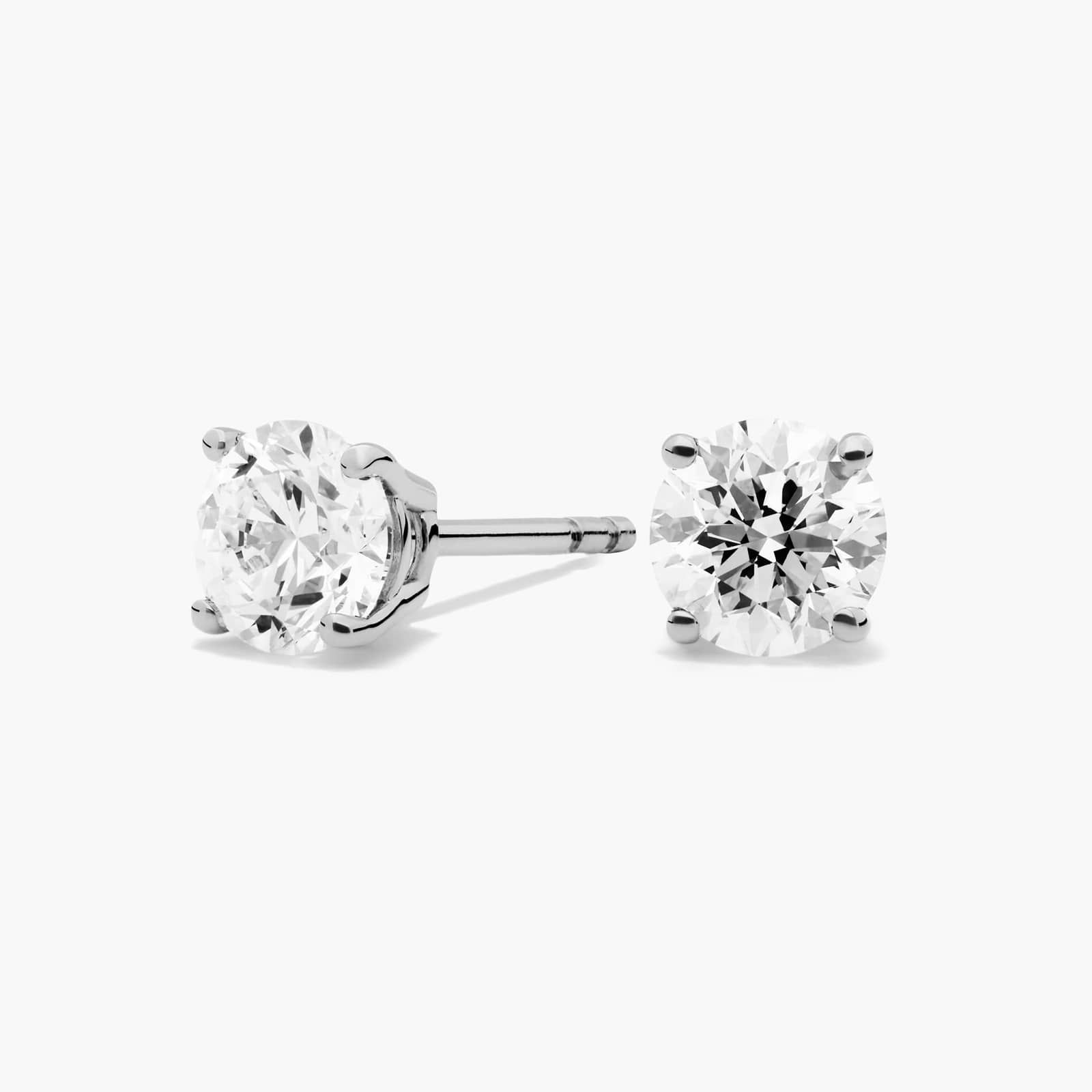
Four prongs show more of the diamond and give a round stone a slightly squarer outline. Six prongs hold it at more points. GIA says a six-prong setting “is often more secure,” and the gemologist Renée Newman, writing in Jewellery Business, adds the practical reason: if one prong on a six-prong head is damaged, the stone usually stays in place until it is repaired. On a four-prong head, losing one prong leaves the diamond far less supported. For pointed shapes such as pear or marquise, Newman recommends V-tips to protect the tips.
On price, the difference is small. On October 11, 2026, Blue Nile listed its Classic Four-Prong Solitaire in 14K white gold at $870 and its Classic Six-Prong Solitaire in 14K rose gold at $1,000, both as settings without a center stone.
How do bezel, halo, pavé, cathedral and flush settings wear?
Bezel
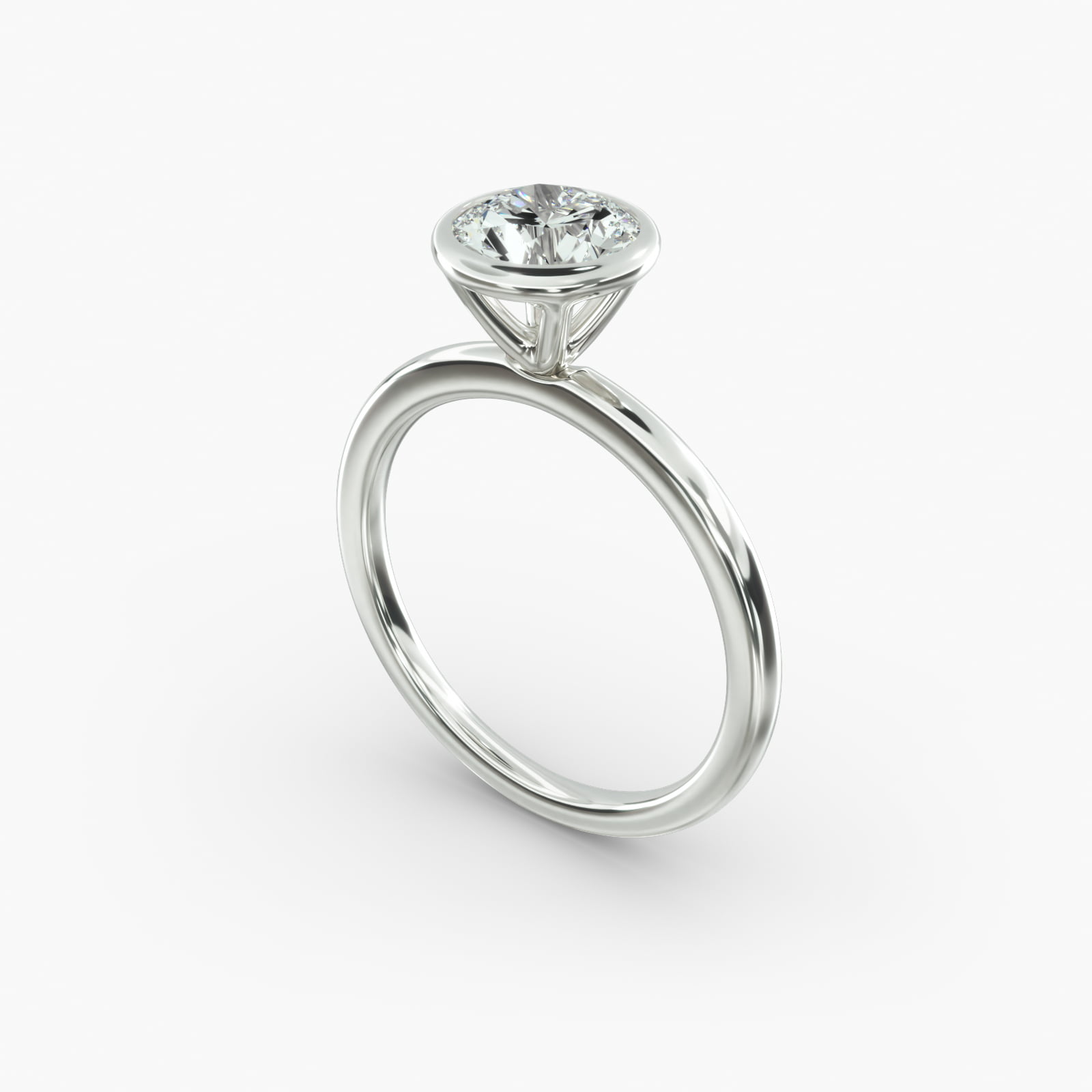
Newman describes a properly made bezel as holding well, needing little maintenance and rarely catching on clothing. Its drawbacks are that it hides a little of the stone and takes longer, and costs more, to make. Blue Nile’s platinum solitaire with a Classic Bezel head was listed at $1,630.
Halo
A ring of small diamonds around the center makes it look larger. GIA notes halo designs typically need more frequent cleaning, and Newman warns that small halo stones can fall out if they are not expertly set. Blue Nile’s Studio Heiress Halo, with 62 accent diamonds totalling 3/8 carat, was $2,980 in 14K white gold and $3,585 in platinum.
Pavé
Small diamonds held by tiny beads of metal along the band. Newman rates pavé as less secure than bezel, channel or flush, and rougher against fabric; GIA lists it among the settings that are harder to resize. Blue Nile’s French Pavé setting with a six-prong head and 28 accent diamonds (1/5 carat total) was $1,540 in 14K white gold.
Cathedral
Arches of metal rise from the band to support the head, lifting the stone. It is elegant, but GIA notes cathedral settings may snag. Blue Nile’s Petite Cathedral Solitaire in 14K yellow gold was $1,015.
Flush and low-set
In a flush, or gypsy, setting the stone is sunk into the band. Newman calls it well suited to people who work with their hands and do not want to take their rings off, with the trade-off that it admits less light than a claw setting. We could not confirm a current Blue Nile flush-set listing, so we give no price for it here.
How do the settings compare?
| Setting | Security | Snagging | Maintenance | Active jobs | Blue Nile setting price |
|---|---|---|---|---|---|
| Four-prong | Good | Can catch, especially high | Prong checks, re-tipping | Fair | $870 (14K white gold) |
| Six-prong | Better | Can catch | Prong checks, re-tipping | Fair | $1,000 (14K rose gold); $1,810 (18K yellow gold, Nouveau head) |
| Bezel | Excellent | Rarely | Low | Best | $1,630 (platinum) |
| Halo | Good center; small stones at risk | Moderate | High: frequent cleaning | Weak | $2,980 (14K white gold); $3,585 (platinum) |
| Pavé | Lower | Rougher on fabric | High; harder to resize | Weak | $1,540 (14K white gold) |
| Cathedral | Good | May snag | Moderate | Fair | $1,015 (14K yellow gold) |
| Flush / low-set | Excellent | Rarely | Low | Best | Not verified |
How much of the budget should go to the setting?
The Knot’s 2024 Jewelry & Engagement Study put the average engagement ring at $5,200. Here is how that budget splits once you choose a setting at Blue Nile’s listed prices; the remainder is what is left for the diamond.
| Setting style | Setting price | Left for the diamond on $5,200 |
|---|---|---|
| Four- or six-prong solitaire | $870–$1,810 | $3,390–$4,330 |
| Cathedral solitaire | $1,015 | $4,185 |
| Pavé band | $1,540 | $3,660 |
| Bezel solitaire | $1,630 | $3,570 |
| Halo | $2,980–$3,585 | $1,615–$2,220 |
The pattern is plain: a halo can take more than half of an average budget before the diamond is chosen. That is not a reason to avoid one, but it is a reason to decide on the setting first and then see what stone the remainder buys.
Which setting suits an active job?
Nurses, chefs, surgeons, climbers, new parents: anyone whose hands are busy all day. GIA and Newman agree on bezel and flush settings for this reader. Both keep the girdle covered, neither catches on gloves or knitwear, and both need little upkeep. If you love the look of prongs, choose six over four, keep the head low, and make a habit of taking the ring off for the gym and for work with tools.
A setting is not only a frame for the diamond. It is the part of the ring that meets the rest of your life.
A short history of the solitaire setting
The raised six-prong solitaire most people picture dates to 1886, when Tiffany & Co. introduced a setting that lifted the diamond above the band to let light in from below. Older rings more often held their stones low, in closed collets close to the finger. The bezel and the flush setting are, in that sense, a return to an older idea of protection over height.
The editor’s recommendation
In our view, most buyers should choose between two settings. If your hands work hard, a bezel solitaire in platinum is the most practical ring you can buy: secure, smooth and low-maintenance, at $1,630 for Blue Nile’s setting. If you want maximum light and your days are kinder to your hands, a six-prong solitaire costs little more than four prongs and gives you a margin of safety if a prong is ever knocked. Choose a halo or pavé for their beauty, not for practicality, and budget for regular checks.
Buying mistakes to avoid
- Choosing a high, four-prong head for a hands-on job.
- Letting a halo absorb the budget meant for the center stone.
- Assuming any ring can be resized: GIA lists channel, bar, tension and pavé as harder, and Blue Nile excludes full eternity rings from free resizing.
- Putting a ring with loose stones in an ultrasonic cleaner; GIA warns it can dislodge them.
- Skipping prong checks because the ring “looks fine.”
A practical checklist
- Write down what your hands do on a normal day and on weekends.
- Pick the setting before the diamond, and price it.
- For prongs, ask for six, or V-tips on pointed shapes.
- Check the setting’s band width and whether the ring can be resized.
- Plan a jeweler’s check of prongs and accent stones, and clean at home with warm water, mild soap and a soft brush, as GIA suggests.
Frequently asked questions
Is a bezel setting less sparkly than prongs?
A little: the rim covers the edge of the stone and admits less light from the sides. Many wearers accept that for the protection it gives.
Are four prongs safe for everyday wear?
Yes, when well made and checked regularly. Six prongs give more margin if one is damaged.
Which setting snags least?
Bezel and flush. Raised prongs and cathedral shoulders snag most.
The Carat Post selection
Affiliate links. We may earn a commission at no extra cost to you. Specifications are as listed on Blue Nile; prices are for the setting only, without a center stone.
Solitaire Engagement Ring, Classic Bezel Head: $1,630 · platinum head and shank · 1.5 mm band · for round, oval, cushion, emerald and other shapes from 0.50 to 8.00 carats · Price checked October 11, 2026. Why: the most protective setting for an active life. View at Blue Nile
Classic Four-Prong Solitaire Engagement Ring in 14k White Gold: $870 · 14K white gold · 1.90 mm band · Price checked October 11, 2026. Why: the most light for the lowest setting price, for gentler daily wear. View at Blue Nile
French Pavé Engagement Ring, 6-Prong Nouveau Head: $1,540 · 14K white gold · 28 round accent diamonds, 1/5 ct total · 1.5 mm band · Price checked October 11, 2026. Why: six prongs on the center with sparkle along the band, for a desk-bound wearer. View at Blue Nile
Blue Nile Studio Heiress Halo Diamond Engagement Ring in Platinum (3/8 ct. tw.): $3,585 · platinum · 62 diamonds, 3/8 ct total weight (based on a 1 ct center) · 1.90 mm band · Price checked October 11, 2026. Why: a halo in the most durable metal, if you accept the upkeep. View at Blue Nile
Related reading
- Best engagement rings from $5,000–$10,000
- Engagement ring styles: solitaire, halo, three-stone
- How much does an engagement ring cost in 2026?
- Diamond shapes guide: round, oval, emerald, pear
- The 4Cs of diamonds explained
- The best fine jewelry from $5,000–$10,000
- All buying guides
Considering a piece in this price range? Send Karina the link and your priorities for an independent second look.
Ask KarinaSources: GIA, Guide to Engagement Ring Settings · GIA, Popular Setting Styles · Renée Newman, Jewellery Business · Diamonds.pro, Flush Settings · The Knot, Average Engagement Ring Cost · Tiffany & Co., The Tiffany Setting · Blue Nile, Free Resizing · Blue Nile listings: four-prong, six-prong, six-prong Nouveau, bezel, halo 14K, halo platinum, pavé, cathedral (Blue Nile listings and Tiffany & Co. checked October 11, 2026; other sources checked October 10, 2026).