The Carat Post independently selects every recommendation. If you purchase through certain links, we may earn a commission at no additional cost to you. Affiliate relationships do not determine our editorial conclusions.
Why trust this recommendation?
Every piece here is chosen by Karina, who has spent 11 years in fine watches and is studying gemology with GIA. Picks are judged from the retailer’s published specifications: stone, grading, setting, metal and price.
Prices were checked on the date shown in the article and can change. Specifications come from the retailer’s listing; nothing is estimated.
The Carat Post is independent and is not affiliated with GIA, Blue Nile or any jewelry house. Read our editorial standards.
A diamond report is a single sheet that decides thousands of dollars. Read it in this order: first confirm the report number on GIA Report Check and match it to the laser inscription on the stone; then read the grades (carat, color, clarity and, for rounds, cut); then the details that separate two stones with identical grades: proportions, polish, symmetry, fluorescence and the comments. This guide walks through every section using GIA’s own published explanations. A note on independence: Karina is a GIA student, but The Carat Post is an independent magazine with no affiliation to GIA.
At a glance
- Check first: the report number, on GIA Report Check, and the matching girdle inscription.
- The grades: carat to the hundredth, color D to Z, clarity Flawless to Included, cut Excellent to Poor (rounds only).
- Read closely: the proportions diagram, fluorescence and the Comments line.
- Lab-grown: since October 1, 2025, GIA assesses D-to-Z lab-grown diamonds as “Premium” or “Standard” instead of using natural-diamond grades.
- Typical spend: a GIA-graded natural 1-carat solitaire ran about $4,000–$5,800 on Blue Nile on October 11, 2026.
How do you check a GIA report number?
Every diamond GIA grades receives a unique report number registered in GIA’s global database. Enter that number on GIA Report Check at gia.edu and the results should match the seller’s listing exactly. Newer reports also carry a QR code that, when scanned, checks the report’s data against GIA’s database. GIA’s own advice for online buyers adds two steps: ask whether the report number is laser-inscribed on the diamond’s girdle, which you can read with a 10x loupe, and have an independent appraiser confirm the stone matches its paperwork once it arrives.
What does each section of a GIA report mean?
GIA’s own reading guide numbers the fields. Here is what each one tells you.
- Date and report number: when GIA examined the stone, and its unique database number.
- Shape and cutting style: the outline (round, oval) and the facet arrangement (brilliant, step).
- Measurements: rounds are listed as minimum diameter – maximum diameter × depth; fancy shapes as length × width × depth, in millimeters. This is how you compare face-up size.
- Carat weight: to the nearest hundredth; one carat is one-fifth of a gram.
- Color grade: D to Z, judged against GIA master comparison diamonds. An asterisk means a color treatment was detected, and the process is described under Comments.
- Clarity grade: Flawless to Included, judged at 10x magnification.
- Cut grade: Excellent to Poor, issued for standard round brilliants in the D-to-Z range. Other shapes receive no overall cut grade.
- Polish and symmetry: surface smoothness, and how precisely the outline and facets are shaped and aligned, each Excellent to Poor.
- Fluorescence: the strength and color of the stone’s glow under long-wave ultraviolet light.
- Clarity characteristics: the most significant features that support the clarity grade.
- Inscription(s): any text, symbol or report number laser-engraved on the girdle.
- Comments: identifying features not shown elsewhere, including detected treatments such as laser drilling.
- Proportions diagram, grading scales and security features: a profile of the stone, the color, clarity and cut scales for reference, and microprinting, a hologram, security screens and a 2D barcode that protect the document.
How do you read the proportions and clarity diagrams?
The proportions diagram is a graphic profile of the diamond’s actual proportions: table and depth percentages, crown and pavilion angles, girdle thickness and culet. Two stones with the same grades can carry their weight very differently, and this is where you see it. Compare the depth figure with the measurements: a deeper stone of the same weight shows a smaller face-up spread.
The full Diamond Grading Report adds a clarity plot. GIA’s key: red marks most inclusions, green marks naturals, black marks extra facets, and red and green together indicate features such as cavities, knots and laser drill-holes. Characteristics are listed by importance to the grade, with any laser drill-hole listed first. GIA leaves off the diagram features that are “widespread or faint, or … not needed to support the clarity grade or identify the diamond”; those may appear under Comments. The shorter Diamond Dossier, offered for natural stones from 0.15 to 1.99 carats, omits the plot.
| GIA document | For | Clarity plot | Notes |
|---|---|---|---|
| Diamond Grading Report | Natural diamonds | Yes | Full 4Cs, proportions, finish, treatments |
| Diamond Dossier | Natural, 0.15–1.99 ct | No | Shorter format |
| eReport | Loose natural D-to-Z, 0.15–2.99 ct | — | Online only, includes a face-up image |
| Laboratory-grown assessment (from Oct 1, 2025) | D-to-Z lab-grown, 0.15 ct and up | — | “Premium” or “Standard”; girdle inscribed “Laboratory-Grown” |
Does fluorescence on a GIA report matter?
Less than its reputation suggests. GIA reports fluorescence by intensity as None, Faint, Medium, Strong or Very Strong, and notes the color when it is Medium or stronger. GIA is clear that “fluorescence is not a grading factor like the GIA 4Cs” but an identifying characteristic. In GIA’s studies, average observers judged strongly blue fluorescent diamonds to have better color face-up, and the hazy effect buyers worry about appeared in fewer than 0.2% of fluorescent diamonds submitted to GIA. Ask for a video in daylight if a stone is Strong or Very Strong; otherwise, treat it as a detail, not a defect.
The grades tell you what a diamond is. The diagrams and comments tell you which one.
How have GIA’s lab-grown reports changed?
In October 2020, GIA introduced a family of digital-only laboratory-grown diamond reports, which used the same color and clarity scales as natural diamonds and stated whether a stone was grown by CVD or HPHT. In June 2025 it announced it would stop using natural-diamond nomenclature for lab-grown stones; GIA’s Tom Moses noted that “more than 95% of laboratory-grown diamonds entering the market fall into a very narrow range of color and clarity.” From October 1, 2025, GIA assesses D-to-Z lab-grown diamonds as Premium (D color, VVS or higher clarity, excellent polish and symmetry, and an excellent cut grade for rounds) or Standard (E to J color, VS or better, very good finish). Stones below Standard receive no assessment. Each is laser-inscribed “Laboratory-Grown” with its GIA number.
What does a GIA-graded 1-carat ring cost?
Here is how the money splits on a natural 1-carat solitaire with a GIA report, using Blue Nile prices checked October 11, 2026. The report itself comes with the stone; GIA’s fee for a lab-grown assessment, by comparison, is US$15 per carat with a $15 minimum.
| Build | Diamond (GIA report) | Setting | Total |
|---|---|---|---|
| Oval 1.00 ct H VS2, four-prong 14K white gold | $3,090–$3,134 | $870 | $3,960–$4,004 |
| Oval 1.00 ct H VS2, six-prong platinum | $3,090–$3,134 | $1,355 | $4,445–$4,489 |
| Round 1.00 ct H VVS2 Excellent, four-prong 14K white gold | $4,453 | $870 | $5,323 |
| Round 1.00 ct H VVS2 Excellent, six-prong platinum | $4,453 | $1,355 | $5,808 |
The editor’s recommendation
In our view, the report is where an online purchase is won or lost, and most buyers read only the four grades. Verify the number before anything else, insist on an inscription that matches, and then spend your attention on the proportions and the Comments line. Between two stones with identical grades, choose the one with the larger measurements for its weight, Excellent polish and symmetry, and no treatment comments. A GIA-graded natural H VS2 is, to us, the most sensible grade to start from for a 1-carat solitaire.
Buying mistakes to avoid
- Trusting a PDF without checking the number on GIA Report Check.
- Missing the asterisk next to a color grade, which signals a detected treatment.
- Skipping the Comments line, where treatments such as laser drilling and unplotted features are noted.
- Assuming every stone has a cut grade. GIA issues one only for round brilliants.
- Buying from listings that give grade ranges instead of specifics. GIA advises looking “for specifics on its 4Cs, not a range.”
- Comparing a lab-grown “Premium” or “Standard” stone directly with a natural D-to-Z grade; they are different systems.
A practical checklist
- Report number entered on GIA Report Check; every field matches the listing.
- Girdle inscription confirmed, with the seller or under a 10x loupe.
- Carat, color, clarity and, for rounds, cut grade noted.
- Measurements and depth compared with similar stones.
- Polish and symmetry: Excellent or Very Good.
- Fluorescence noted; daylight video requested if Strong or Very Strong.
- Comments read for treatments; no asterisk on the color grade.
- Return policy and insured shipping confirmed; independent appraisal booked on arrival.
Frequently asked questions
Is a GIA report the same as a certificate?
Retailers often say “certificate,” but GIA issues grading reports: a scientific assessment of the stone, not an appraisal of its value.
Why doesn’t my oval have a cut grade?
GIA assigns an overall cut grade only to standard round brilliants. For other shapes, judge the proportions, polish, symmetry and the stone itself.
Is strong fluorescence bad?
Not usually. GIA found the hazy effect in fewer than 0.2% of fluorescent diamonds submitted, and observers often preferred strongly blue fluorescent stones face-up.
How can I tell if a GIA report is for a lab-grown diamond?
GIA’s lab-grown documents state that the stone is laboratory-grown, and GIA inscribes “Laboratory-Grown” with the report or assessment number on the girdle.
The Carat Post selection
Selected from Blue Nile’s published specifications; each diamond below is listed with a GIA report. These are affiliate links: we may earn a commission at no extra cost to you.
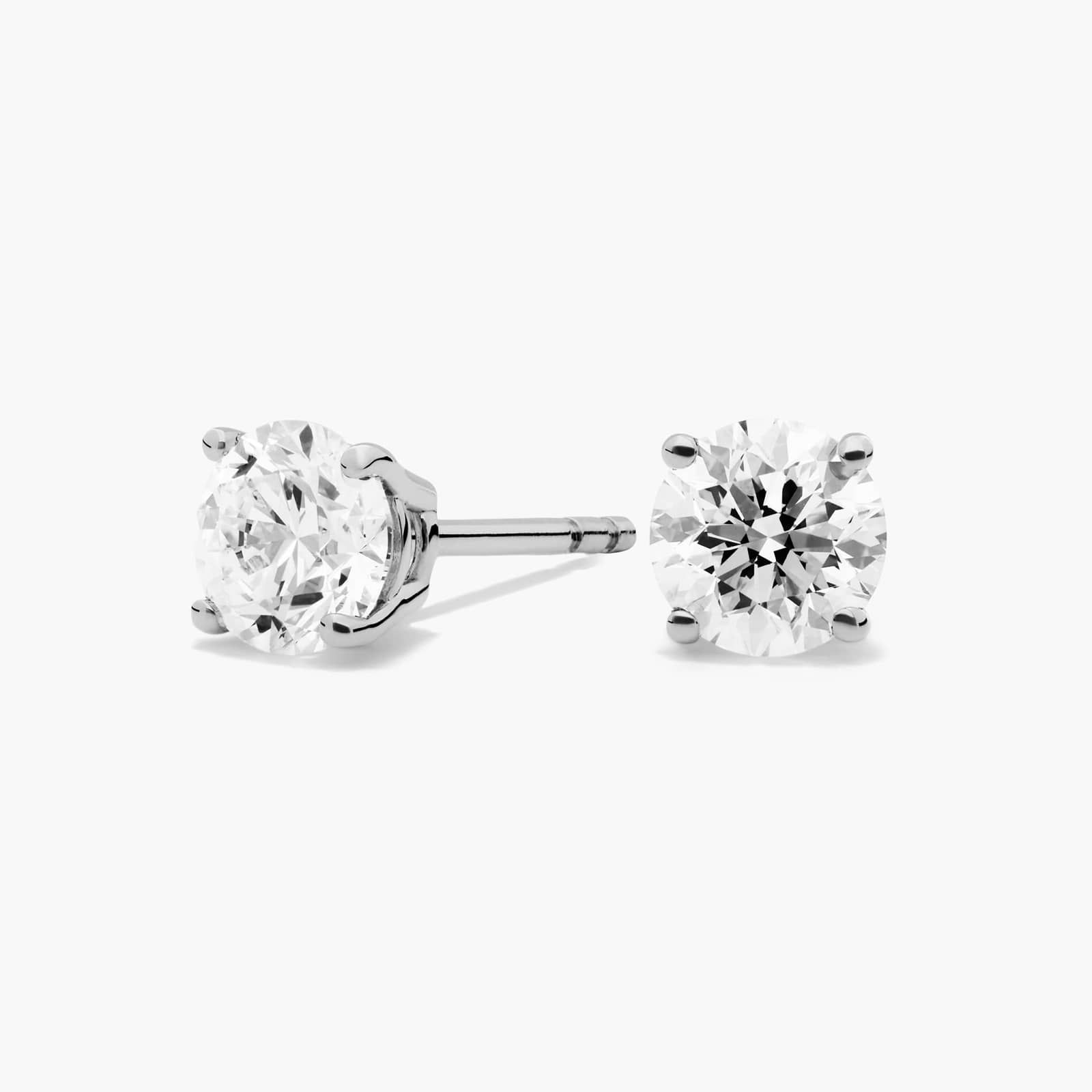
- GIA 1.00 Carat H-VVS2 Excellent Cut Round Natural Diamond (stock 18800661), $4,453. Polish and symmetry Excellent, fluorescence None, 6.47 × 6.50 × 3.94 mm, depth 60.7%, table 59%. Price checked October 11, 2026. Why: triple Excellent with no fluorescence, and a generous spread for its weight. View at Blue Nile
- GIA 1.00 Carat H-VS2 Very Good Cut Oval Natural Diamond (stock 29492682), $3,134. Polish and symmetry Excellent, fluorescence None, 7.43 × 5.64 × 3.63 mm, ratio 1.32, depth 64.4%, table 63%. Price checked October 11, 2026. Why: clean finish grades at the grade we recommend starting from. View at Blue Nile
- Classic Six-Prong Solitaire Engagement Ring in Platinum (item 194157), $1,355 setting price. 1.90 mm band. Price checked October 11, 2026. Why: six prongs in platinum give a well-graded stone a secure, quiet frame. View at Blue Nile
Related reading
- Best engagement rings from $5,000–$10,000
- The 4Cs of diamonds explained
- Lab-grown vs. natural diamonds: 2026 prices
- Diamond shapes guide: round, oval, emerald, pear
- How much to spend on an engagement ring in 2026
- All buying guides
Considering a piece in this price range? Send Karina the link and your priorities for an independent second look.
Ask KarinaSources: GIA, How to Read a GIA Diamond Dossier · GIA, How to Get a GIA Report · GIA, Decoding Diamond Clarity Diagrams · GIA, Understanding Diamond Color Grade · GIA, Diamond Fluorescence · GIA, Tips for Buying Diamonds Online · GIA, LGDR announcement (2020) · GIA, new lab-grown terminology (June 2025) · GIA, updated lab-grown services (Aug 2025) · GIA Report Check · Blue Nile listings 18800661, 29492682, 28729035, 194360, 194157 (checked October 11, 2026)