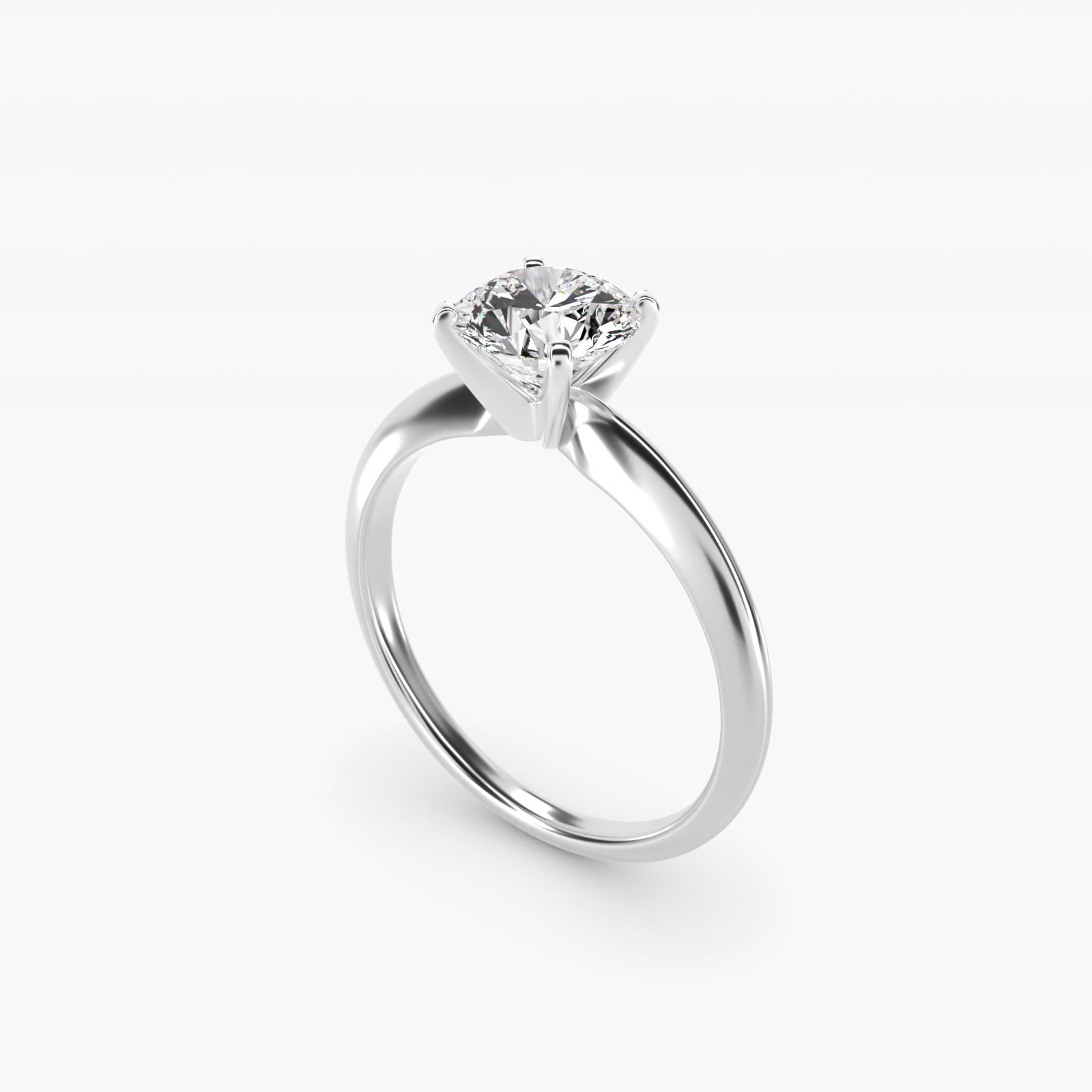
The Carat Post independently selects every recommendation. If you purchase through certain links, we may earn a commission at no additional cost to you. Affiliate relationships do not determine our editorial conclusions.
Why trust this recommendation?
Every piece here is chosen by Karina, who has spent 11 years in fine watches and is studying gemology with GIA. Picks are judged from the retailer’s published specifications: stone, grading, setting, metal and price.
Prices were checked on the date shown in the article and can change. Specifications come from the retailer’s listing; nothing is estimated.
The Carat Post is independent and is not affiliated with GIA, Blue Nile or any jewelry house. Read our editorial standards.
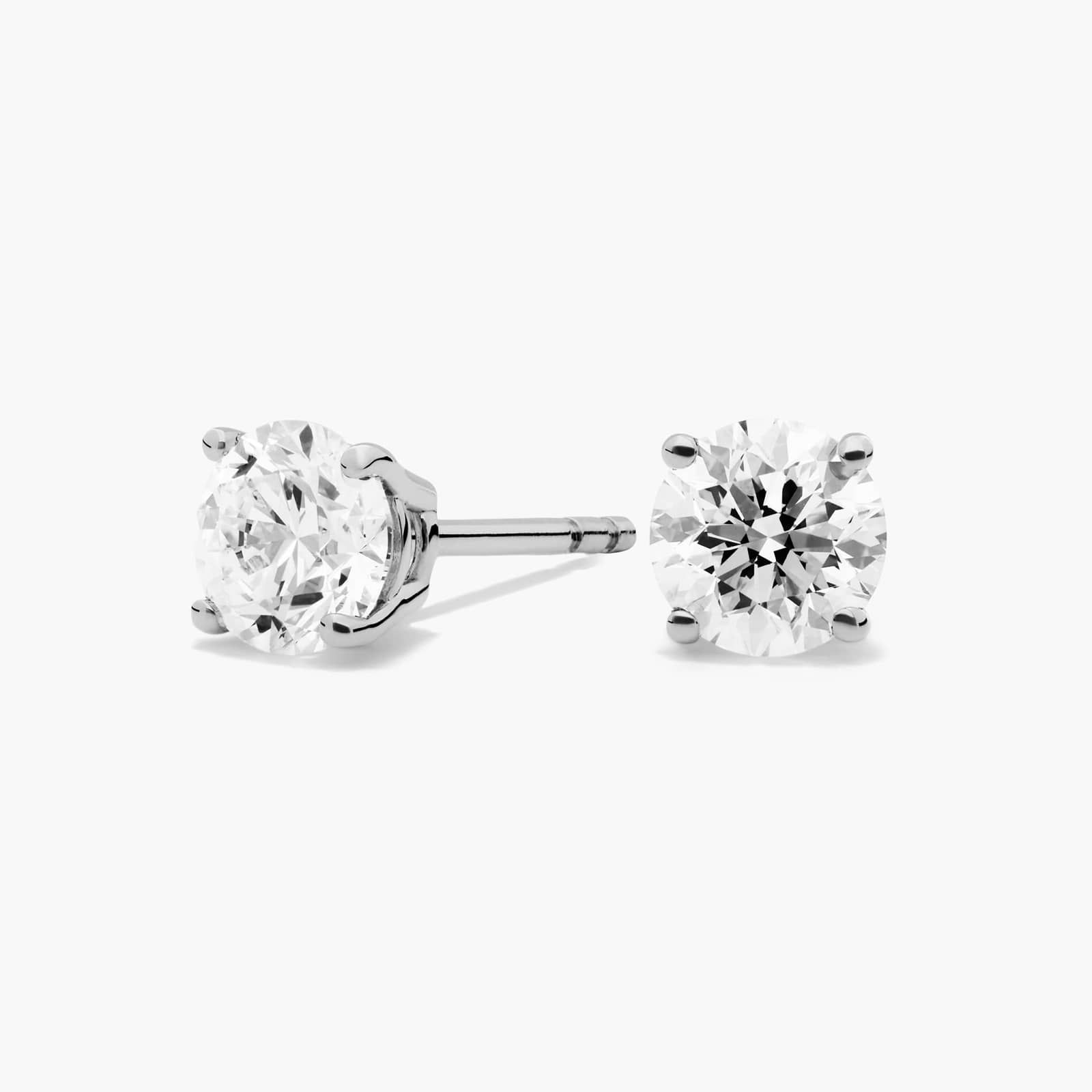
One carat, two very different faces. If you want the most sparkle and the most timeless look, choose a round. If you want a stone that looks longer on the finger and costs a little less at the same grade, choose an oval with a length-to-width ratio between 1.35 and 1.45 and a mild bow-tie. On Blue Nile on October 11, 2026, a 1.00-carat GIA-graded H VVS2 oval was listed at $4,238 against $4,453 for a round of the same weight, color and clarity: about 5% less, for a stone more than a millimeter longer.
At a glance
- Quick answer: Round for maximum brilliance and a graded cut; oval for length on the hand and a modest saving.
- Face-up size, 1.00 ct: Rounds listed at about 6.2–6.5 mm across; ovals at about 7.4–7.8 × 5.6 mm (Blue Nile listings).
- Price, same grade: $4,238 oval vs. $4,453 round, 1.00 ct H VVS2, both GIA-graded natural diamonds.
- Best oval ratio: 1.40–1.50 for a traditional oval; 1.30–1.40 for a softer, rounder look (GIA).
- Watch for: the bow-tie, a dark band across an oval’s center that every oval shows to some degree.
Does an oval diamond look bigger than a round?
It looks longer, which most eyes read as bigger. GIA notes that the oval’s elongated shape “offers a larger surface area than round diamonds of the same carat weight.” The real listings tell a more precise story. Every 1.00-carat oval we checked on Blue Nile measured between 7.43 and 7.77 mm long; the 1.00-carat rounds ran from 6.15 to 6.47 mm across. That is roughly 1 to 1.6 mm more length, and it is what you notice on a hand.
Total face-up area is closer than the marketing suggests. Treating each oval as a true ellipse, which slightly understates a real oval’s fuller outline, our arithmetic puts the 7.77 × 5.56 mm oval at about 34 mm² and the 6.47 × 6.50 mm round at about 33 mm². The difference widens against a deeper-cut round: a 6.33 × 6.38 mm round comes to about 32 mm². In short, an oval gives you length and a slender line; a well-cut round of the same weight is not much smaller in area.
| 1.00 ct natural, GIA report | Measurements (mm) | Ratio | Depth | Price (Oct 11, 2026) |
|---|---|---|---|---|
| Round, H VVS2, Excellent cut | 6.47 × 6.50 × 3.94 | 1.00 | 60.7% | $4,453 |
| Oval, H VVS2, Good cut* | 7.77 × 5.56 × 3.67 | 1.40 | 66.0% | $4,238 |
| Oval, H VS2, Very Good cut* | 7.55 × 5.56 × 3.60 | 1.36 | 64.8% | $3,090 |
| Oval, H VS2, Very Good cut* | 7.43 × 5.64 × 3.63 | 1.32 | 64.4% | $3,134 |
| Round, H VS2, Excellent cut (sold) | 6.33 × 6.38 × 4.01 | 1.01 | 63.1% | No longer listed |
Which sparkles more, an oval or a round?
The round, on the evidence a buyer can check. It is the only shape for which GIA issues an overall cut grade, from Excellent to Poor. That grade gives you a reliable shortcut to brightness. An oval is cut with the same 57 or 58 facets as a standard round brilliant, GIA explains, so it shares “similar visual qualities”, but with no GIA cut grade you judge its performance from proportions, polish, symmetry and, above all, the video.
Notice the depth figures in the table. The ovals sit at 64–66% depth, the best round at 60.7%. Weight carried deep in the pavilion does not show face-up, which is one reason a round at 61% can match an oval’s spread despite its shorter outline.
What is the bow-tie effect?
The bow-tie is a dark, butterfly-shaped shadow across the width of an oval. GIA attributes it to the viewer’s own head and shoulders blocking light from entering the stone, adding that “some degree of bow tie is always present” and that it looks stronger the closer your face is to the diamond. A good cutter keeps it soft. You cannot read it from a grading report, so look at the stone in a rotating video: a faint, shifting bow-tie is normal; a black band that stays put is not.
What length-to-width ratio is best for an oval?
GIA describes 1.40 to 1.50 as the traditional oval, 1.30 to 1.40 as a softer and rounder look, and anything above 1.50 as rarely seen. To calculate it, divide length by width. The three ovals above sit at 1.32, 1.36 and 1.40, inside GIA’s two most common bands.
An oval buys you length. A round buys you certainty.
Where did the oval brilliant come from?
Brilliant faceting first emerged around 1700, when cutters followed the natural contours of the crystal and produced mostly cushion shapes. Gemological literature did not name the oval as a distinct shape until the late 1800s, and GIA credits the diamond cutter Lazare Kaplan with developing the modern oval brilliant in 1957.
How much does a 1-carat oval or round ring cost?
Here is how the money splits for a natural 1-carat solitaire, using Blue Nile’s listed prices on October 11, 2026. The diamond takes roughly three-quarters or more of the total in every combination.
| Build | Diamond | Setting | Total |
|---|---|---|---|
| Oval, 1.00 ct H VS2, four-prong 14K white gold | $3,090–$3,134 | $870 | $3,960–$4,004 |
| Oval, 1.00 ct H VVS2, six-prong platinum | $4,238 | $1,355 | $5,593 |
| Round, 1.00 ct H VVS2, four-prong 14K white gold | $4,453 | $870 | $5,323 |
| Round, 1.00 ct H VVS2, six-prong platinum | $4,453 | $1,355 | $5,808 |
One caution on the comparison: on the day we checked, every 1.00-carat H VS2 round we found on Blue Nile had already sold, so we cannot quote a like-for-like VS2 price. The VVS2 pair is the cleanest same-spec comparison available.
The editor’s recommendation
In our view, a round is the safer purchase for anyone buying online without seeing the stone, because the GIA cut grade does much of the judging for you. Choose Excellent cut, polish and symmetry and you are nearly done. An oval is the better buy if you love the shape and are willing to study the video: pick a ratio between 1.35 and 1.45, favor the longer measurements and lower depth among similar stones, and choose a bow-tie you can barely find. Save the difference on color and clarity, not on cut; an H VS2 oval at about $3,100 is the sweet spot in this range.
Buying mistakes to avoid
- Buying an oval from a still photograph. The bow-tie only shows in motion.
- Assuming a retailer’s oval “cut grade” is a GIA grade. GIA grades cut only on rounds.
- Ignoring depth. Two 1-carat stones can differ by several tenths of a millimeter face-up.
- Choosing a ratio above 1.50 without seeing it. GIA notes such long ovals are rare and often show a stronger bow-tie.
- Comparing prices across different grades and calling it a shape discount.
A practical checklist
- Confirm the grading report, and check its number on GIA Report Check.
- Round: Excellent cut, polish and symmetry on the GIA report.
- Oval: ratio 1.35–1.45; Excellent or Very Good polish and symmetry; compare depth against similar stones.
- Read the measurements, not just the carat weight.
- Watch the 360° video for the bow-tie and for even brightness edge to edge.
- Check the return window before you set the stone.
Frequently asked questions
Is an oval diamond cheaper than a round?
Usually somewhat. In our October 11, 2026 check, a 1.00-carat H VVS2 oval listed at $4,238 and a matching round at $4,453, a difference of $215.
How big is a 1-carat oval in millimeters?
The 1.00-carat ovals we found measured 7.43 to 7.77 mm long and 5.56 to 5.64 mm wide; 1.00-carat rounds measured about 6.15 to 6.47 mm across.
What is the most popular oval ratio?
GIA describes 1.40 to 1.50 as the most popular, traditional range; 1.30 to 1.40 gives a gently elongated, rounder look.
Does GIA give ovals a cut grade?
No. GIA assigns an overall cut grade only to round brilliants; ovals receive polish and symmetry grades.
The Carat Post selection
Selected from Blue Nile’s published specifications. These are affiliate links: we may earn a commission at no extra cost to you. Price checked October 11, 2026 for each.
- GIA 1.00 Carat H-VS2 Very Good Cut Oval Natural Diamond (stock 28729035), $3,090. 7.55 × 5.56 × 3.60 mm, ratio 1.36, depth 64.8%, table 60%, polish and symmetry Excellent, fluorescence None. Price checked October 11, 2026. Why: a classic ratio and Excellent finish at the sweet-spot price. View at Blue Nile
- Classic Four-Prong Solitaire Engagement Ring in 14k White Gold (item 194360), $870 setting price. 1.90 mm band. Price checked October 11, 2026. Why: four prongs show the most of an oval’s outline. View at Blue Nile
- Round 1.5 CT Certified Diamond Claw Prong Flush Fit Solitaire Engagement Ring in Platinum by James Allen (item 314996), $8,220. Natural round, 1 1/2 ct, G-H color, SI clarity (averages), platinum, 2.00 mm band; grading lab not named on the page. Price checked October 11, 2026. Why: the round case, ready-set, for buyers who want it finished. View at Blue Nile
- Oval-Cut Eternity Ring in Platinum, 2 ct tw (item 258485), $4,995 (was $6,660). 23 natural ovals, about 2 ct total, H-I color, SI1-SI2 clarity (averages), 3.50 mm band; cannot be resized. Price checked October 11, 2026. Why: the oval’s length, repeated all the way round. View at Blue Nile
Related reading
- Best engagement rings from $5,000 to $10,000
- Diamond shapes guide: round, oval, emerald, pear
- The 4Cs of diamonds explained
- How much to spend on an engagement ring in 2026
- Engagement ring styles: solitaire, halo, three-stone
- The best fine jewelry from $5,000 to $10,000
Considering a piece in this price range? Send Karina the link and your priorities for an independent second look.
Ask KarinaSources: GIA, Oval Cut Diamond Guide · Blue Nile listings: round 1.00 ct H VVS2, oval 1.00 ct H VVS2, oval 1.00 ct H VS2, oval 1.00 ct H VS2, round 1.00 ct H VS2 (sold), round 1.00 ct H VS2 (sold), Classic Four-Prong setting, Classic Six-Prong setting (all checked October 11, 2026)